The old banner has finally come down and been replaced. It probably took the 2 Guyz’ relentlessness…and Covid-19.
The 2 Guyz on Marketing say, “Thank you.” For multiple reasons.
“THIS TOO SHALL PASS” is the new message with a phone number
The 2 Guyz Larry remembered the on-air radio contest in 1991 on the once famous Ken and Barkley Company radio program. It was back when radio personalities were media stars of the city, and wielded a lot of clout.
Larry decided to go in 2018 with a former student and have a hamburger from Hamburger Habit at 11223 National Blvd, Los Angeles, CA 90064. Over the years Londre had always doubted the use of this banner which says “Best Hamburger.” But more than his quest for the perfect burger, he is a lifelong collector of marketing and advertising stories.
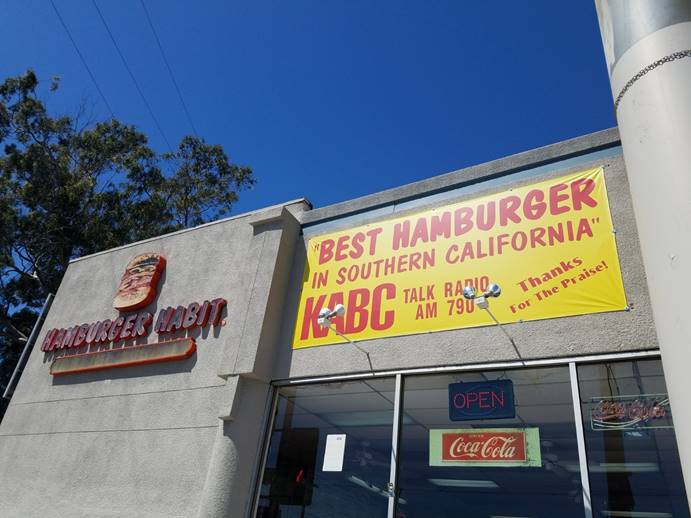
So many things were wrong with the posting of the old banner.
Well, it was once judged best by a radio show, so that much is true.
Was the claim true for the past 20 years? Probably not. Does anything stay “best” that long?
But most importantly, it’s been too darn long to claim the results from a 1991 radio station promotion!
Both of The 2 Guyz on Marketing teach and work in marketing, advertising and promotion. In our classes, this brings up issues of advertising ethics, honesty in advertising, and sound business practice (or lack of).
Sales promotion includes several communications activities, under “Promotion” in the nine P’s of Marketing, that attempt to provide added value or incentives to wholesalers, retailers, or consumers to stimulate immediate sales. These efforts or activities attempt to stimulate product interest, trial, or purchase.
Ultimately they are trying to sell more hamburgers and fries.
Sales promotion is the process of persuading a potential customer to buy the product. Sales promotion is designed to be used as a short-term tactic to boost sales.
Larry and his former student agreed that it was NOT the best hamburger even within three blocks of National and Sepulveda. For many reasons it was not appropriate to use the banner. I would bet no one who was part of their “hamburger“ study” even works at KABC anymore. I would also bet they have changed suppliers, ingredients and employees multiple times, too.
Legally, the FTC gives us the “6 Month Rule,” which basically states a “new product” is new for six months.
An advertiser cannot promote a new product is “NEW” forever. (That’s why a lot of products do smaller innovations more frequently, so that can continually “legally” claim to be new, or “new and improved.”)
But simply it’s not good to say you “were”, if you “are not”. And even if you “were” back then, 29 years is just too long.
ALL THINGS DO PASS.
]]>How do we measure marketing, advertising, and PR strategies and tactics? Well, we often argue about what is great, but we rarely (if ever) argue about what’s bad. Very simply, marketing that makes us cringe.
Bad marketing is more than just wasted time or money. It’s lost opportunity. The 2 Guyz Larry created the 9 P’s of Marketing (Planning, Product, People, Price, Promotion, Place, Partners, Presentation, and Passion). There is so much that goes into good marketing, that’s it’s easy to go astray. Unfortunately, for some, it’s easy to turn not-so-good marketing into bad marketing.
Bottom Line: Some ads should have never run, some press events should never have happened, and some brands have just taken terrible turns for the worse.
A major lesson learned: If anyone in a client meeting or in the approval process should have said, “No way,” listen to them, and take another look at what you are doing.
So, for your marketing “guilty pleasure”, we present to you, the 2019 Baddie Awards!
cringe • /krinj/ verb
bend one’s head and body away from an ad or promotion in fear or in a servile manner.
“they cringed away from the ad and thought negatively about the brand, for almost forever.”
1. (tie) Juul
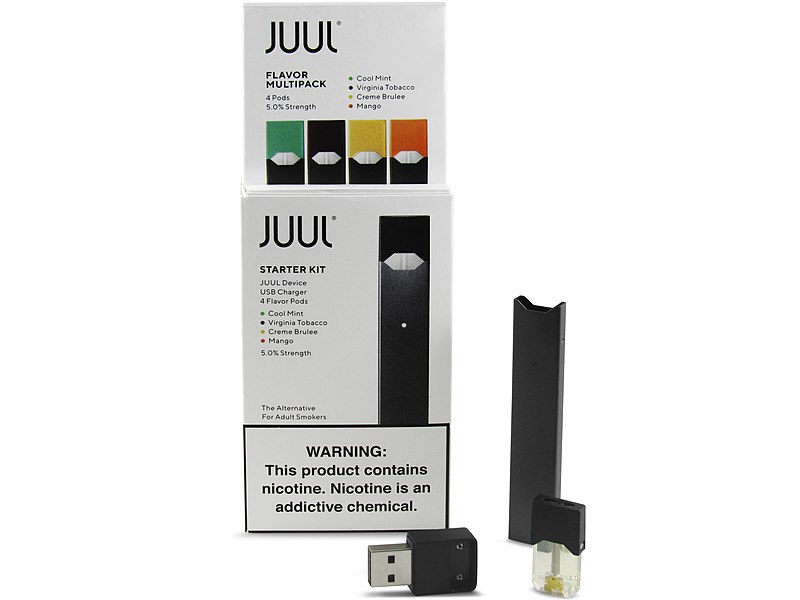
Juul’s “Product.” Mint was their most popular showing mint’s huge popularity among underage and teenage vapers. Mint accounted for about 70% of Juul’s sales in the U.S. Juul Labs has immediately stopped online sales of their mint “Products” in October, it was last month that Juul Labs announced that they would stop the sale of flavors other than tobacco, mint and menthol.

1. (tie) Santa Anita Race Track
Santa Anita Race Track, with its 37 racing and training deaths of horses. Do we need to continue a sport which horses die at a rate of 1.68 for every 1000 starts? Think about track and field and human. How is this acceptable to entertain bettors and race track goers? During the 2019 season, there were 493 horse racing fatalities. Enough is enough.
3. Political Ads
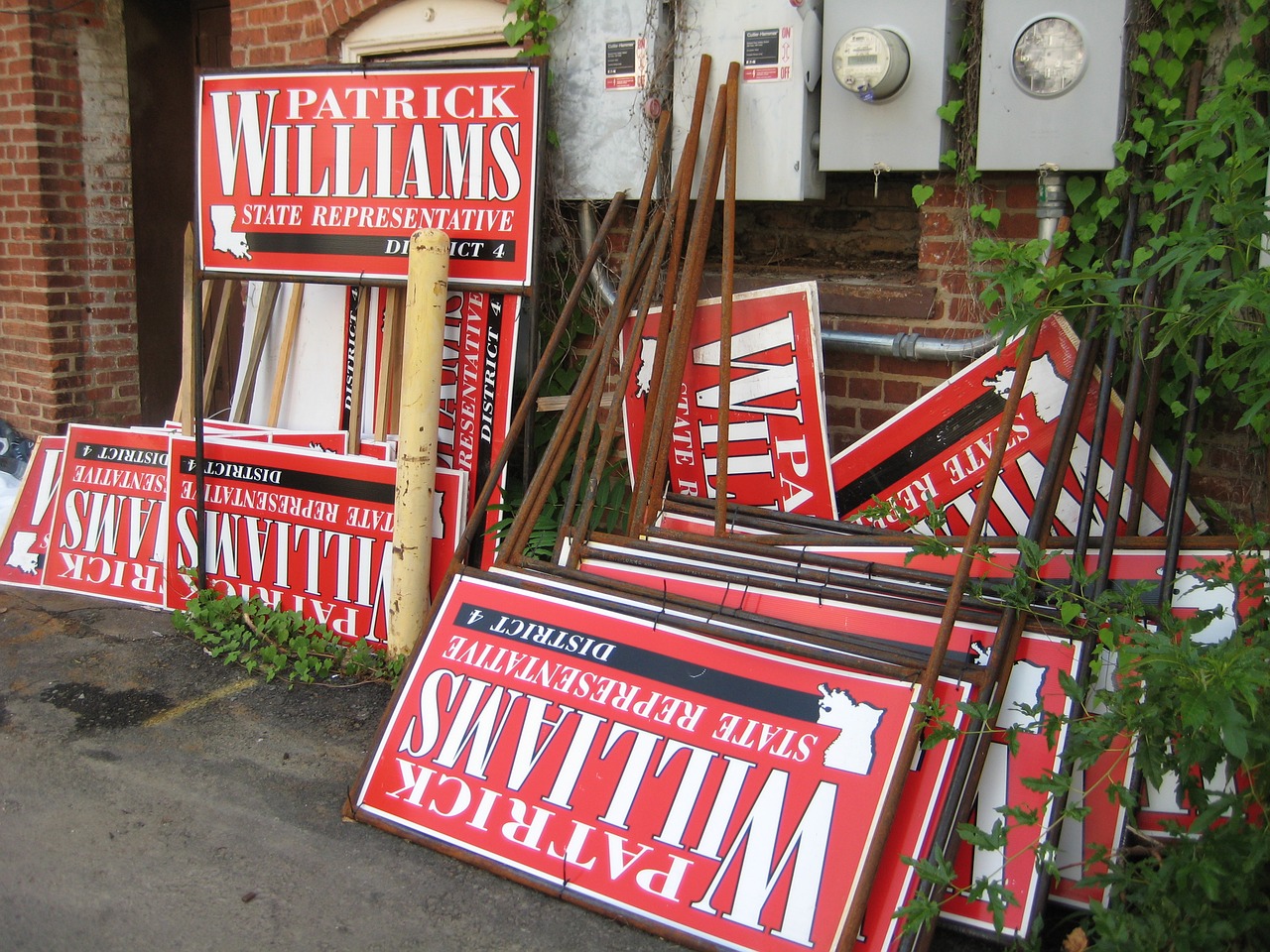
Any 2019 political ad, since most are not believable. We can’t wait for 2020. That’s sarcasm.
4. Cheez-It Pizza
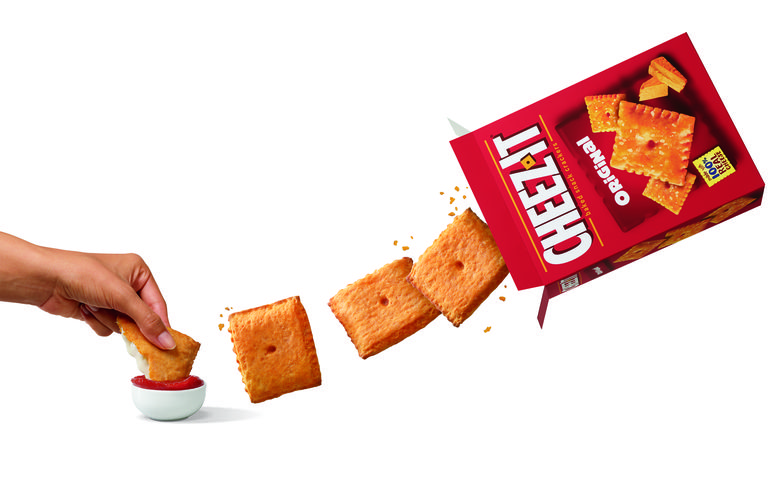
The stuffed Cheez-it pizza from Pizza Hut. It gets on our list because of how it looks.
5. M&M’s
M&M’s running the “Spy” spot in their cinema advertising, running over and over and over. This cinema spot appeared on last year’s list and is on again. Still running. Enough is enough. Frequency of obnoxious ads makes them worse.

6. IHOP
IHOP’s Happy Mother’s Day to ALL the moms out there!” They tweeted a bizarre image of a towering pile of pancakes seemingly stacked inside a woman’s body, via an ultrasound. Inappropriate image and promotion. “If you have pancakes in your tum tum does that make you a pancake mum mum?”

7. Movie Pass
Last September 14, 2019, MoviePass was shut down. MoviePass, the subscription service that spent enormous amounts of venture capitalists’ money subsidizing movie tickets in a bid to upend the theater business model, is officially died. Last year Movie Pass said it had 2,000,000 subscribers at $9.95/month, letting movie goers see a movie a day. 30 movies a month. When it seems unbelievable, it usually is. Too much demand. Couldn’t sustain and had to take out loans. Dropped from 30 movies a month to 3, plus limited access to wide-release movies during peak demand. Not the same deal. Couldn’t generate any more investor money. DOA.
8. Tesla
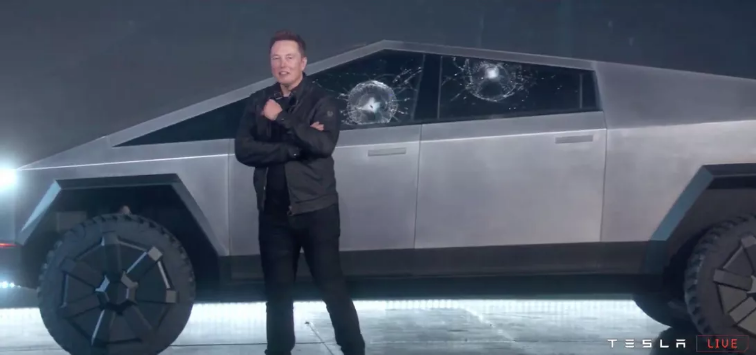
Tesla’s Pickup Cybertruck Press Conference. Tesla is cool. Elon Musk is cool. But who told them to demonstrate breakproof glass by throwing a rock at it…twice?!?!? And doing without being 100% sure it would work. That was a PR gaff that will be remembered (and enjoyed) by many years to come.

9. Facebook
Facebook. Facebook makes over $50 billion a year. They have more than a billion users. Yet they just can’t seem to get this whole “security” thing together. This year we learned more about Cambridge Analytica and their access to all of our private data, data breeches, fines (some $5 billions of fines from the FTC alone!) Facebook…we like you, but we don’t need you to survive. You must protect our data better, or we will leave, and many are threatening to do so in anticipation of the 2020 elections!
10. Boeing
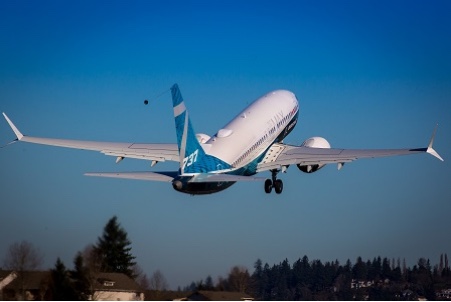
The 737 Max Scandal has really tarnished Boeing’s once rock-solid image.
The Boeing 737 MAX is a narrow-body commercial aircraft series, the fourth generation of the Boeing 737. FAA has said it again, and again: Boeing’s 737 Max is not ready for certification.
]]>There’s a rise in vaping among teens.
Is that evidence that Juul is marketing to kids? Not yet. But it is evidence of something.
The facts: Juul’s first promotional campaign “Vaporized,” started in 2015. Later Juul-related posts exponentially exploded on Instagram and Twitter with photos, posted by young people using the Juul.
Vaping among teens jumped 78% from 2017 to 2018, according to reports.
Now the Federal Trade Commission (FTC) is investigating the Marketing practices of Juul.
Standford University School of Medicine felt it interesting enough to conduct a pretty impressive research paper on Juul’s early marketing. Click here to read the report.
To The 2 Guyz, Juul is confusing people with their messaging and PR.
To us, Marketing is more than promotion. We teach and consult that Marketing has many components including targeting (or people), product, place, presentation, partners, and promotion (see Londre’s 9P’s of Marketing).
Test marketing is a test of one or more of the 9P’s of Marketing. It shows intent, thinking, and possible strategic direction.
Specifically, the FTC is investigating whether the e-cigarette firm Juul Labs used media influencers and other marketing and promotional activities to appeal to minors.
Juul is saying it’s not a big deal.
- “FTC probe examines whether e-cigarette maker engaged in deceptive marketing; Juul says it hasn’t targeted minors, has stopped using paid influencers.”
- “Our paid influencer program, which was never formalized, was a small, short-lived pilot” that ended last year,” a Juul spokesman.
“Really?” says Londre of The 2 Guyz. Their own words add up to marketing and promotional practices, with sales being one of the ultimate determinants of marketing success. There are sales to teens. Teens are using.
By Juul’s own words they said “test marketing and promotion.” A pilot or test is formal. They used ten former smokers to “sell and promote.” It is a marketing test. They were conducting formal and strategic sales. Based on the experiences of these two marketing professionals and teachers, this shows intent.
Juul says it has never marketed to youth and that its products are intended for adult cigarette smokers. But teens are buying and using.
Okay, let’s look at some visual evidence. What do you think of this marketing material…is it targeting senior middle-aged or senior citizens? We think not.
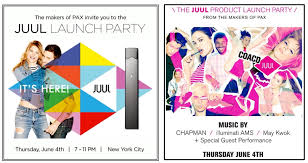
Juul is using mass media to sell the product. Teens are on the street and in cars and the message is getting out there.
]]>It all started with Popeye’s introducing a new chicken sandwich. It consists of some chicken on brioche, with pickles and mayo. That’s it. This was way back, a little more than two weeks or on Aug. 12.
Chick-fil-A tweets out a simple, harmless tweet that lays claim to being the first with the sandwich, not even mentioning Popeye’s.
And the gauntlet was thrown down.
Popeye’s responded, and a chicken sandwich war had become. Shots across bows. Hashtag mania. Tons of PR.
Some tweeted that they now could get a great chicken sandwich without supporting Chick-fil-A’s politics. Others made racial slurs about the target audiences. And even celebrities jumped into the fray.
And now, not even three weeks later, Popeye’s has just announced that, while the purchased enough to supply stores with sandwiches through September, they are official sold out of the new sandwich. Which in turn is causing even more publicity?
Londre asks “Was this all planned?” Some was. Most wasn’t. Add the “planned” scarcity and publicity and sometimes you can strike gold. There’s a concept of “scarcity marketing,” which is a technique or principle that “People (one of the nine P’s) may want what is difficult to obtain. If an event is SRO (standing room only) don’t “people” want to get in?
Apex Marketing Group, a consulting firm in Michigan, has released a report estimating that Popeye’s received $23.25 million in free advertising as a result. Popeye’s ad agency, GSD&M, which also oversees social media for the chain, is clucking with happiness.
Popeye’s Twitter following has grown more in three weeks, than in nearly three years.
Will it have staying power? Time will tell.
Sounds like a victory for Popeye’s. And maybe a taste test for the 2 Guys On Marketing…when the sandwiches are back in stores!
For the 2 Guyz, smart Marketing moves, and it’s a chicken sandwich which has legs, sales and publicity.
]]>Place is where the company’s activities are, where they make the product available, using distribution and trade channels, roles, coverage, assortments, locations, inventory and transportation characteristics and alternatives.
Can your customers find your product? Is it someplace easy? Convenient? Nearby? Online?
How can customers, clients or users see or know the difference between your product or service and your competition, if they can’t find it? Have you looked at the “true” cost of free shipping in e-commerce?
Do the potential customers (Potential customers are “People” in the 9P’s equation) know about or are they aware of your product or service? Why is your product or service better at a given location? Or is it a “lesser brand” if it’s not there? (For example, many fast food restaurants have contracts with soft drink companies, and limit or eliminate competitive brands.)
The 9 P’s/9P’s of Marketing can be used successfully by product companies, service firms, for profits entities and nonprofits “selling” directly or indirectly to consumers (B2C), to marketing intermediaries (such as industrial, consumer, retail, wholesale and professional channels of distribution), and to other businesses (B2B).
We teach excellent Marketing is the offering the right Product to the right People, at the right Price, with the right Partners and Presentation, at the right time, at the right PLACE.
Marketing managers consider, develop and review store and non-store, e-commerce and “brick and mortar” factors, considerations, objectives, strategies and tactics, including “Partners.”
Look at some of the factors in developing an effective and efficient distribution plan, objectives, strategies, and tactics, all the way through execution.
- Channels of distribution.
- Shipping options
- Considerations in and for an effective distribution network and partners.
- Channel partners. Identify and specify the roles of distribution partners and members, within the integrated strategic distribution strategies.
- Develop geographic strategies.
- Develop and review financial conditions of partners, perishability, installation, maintenance and use of technology. Regarding technology or technographical characteristics. Understand your potential partner. Remember, in the back of your mind, that the reason technology is phenomenal is because it displaces years, or centuries, of previous technology. Partners and your consumers may or may not have the skills. Think employees here too. The reason technology skills are transitory is because they will almost certainly be displaced, too.
A typical supply chain may consist of four links in the chain:
- Producer > Factory > Manufacturer >
- Distributor > Wholesaler > Retailer >
- Consumer (supplying the ultimate users)
Here are “Place” examples from the 2 Guyz on Marketing.
- Delivery-company executives have found that discounts and promotional offers attract users and encourage them to order more frequently, but those promotional offers lead customers to hop from one service to another. They are looking for better or best offers, with little loyalty. Research has found that younger users lack loyalty or displaying reliability in next or repeat purchases. They want and look for a better deal or offer.
- From Phil Knight of Nike: “Supply and demand is always the root problem of business. It’s hard enough to invent, manufacture and market a product, but then there are the logistics, the mechanics, the hydraulics of getting it to the people who want it, when they want it—that is how companies die…”
- It was reported that Subway was selling 80% of its new franchise locations to existing franchisees. More than half of the locations are non-traditional including schools, zoos, military bases, plus hospitals. Where there are “captive audiences,” or under “People.” (Bloomberg.com and subway.com)
- This example would fall under both Place and Promotion: There are 210 markets in the U.S. TV advertising marketplace. (Nielsen)
Place is more than just distribution. The smart marketer should explore all the different aspects of place: where is the brand made, where is it distributed, where is the competition, where is the competition missing from, where are the customers, where do they live/shop/buy…all critical questions related to Place.
For more Marketing insights, ideas, concepts and Marketing solutions: Go to Londremarketing.com and look under “Articles and Resources” and the 9P’s/Nine P’s . Created by Larry Steven Londre. Copyright 2007.
]]>The 2 Guyz know and see the changes which are occurring in how marketers connect with their suppliers, agencies, channel partners and others. This post in our series is about “Partners,” which may be integral to your company’s success.
In sophisticated Marketing there are more than the four P’s of Marketing. With the nine P’s of Marketing, The 2 Guyz believe that “Partners” and “Alliances” or “Strategic Alliances” are vitally important to the success of a firm’s overall marketing efforts, objectives, strategies and tactics.
“Partners” isn’t one of the original four P’s, but is a distinct and important element under the 9P’s of Marketing.
Can your customers, clients or users tell the difference between you and your competition? What about your alliances and partnerships…are you working with special suppliers, distributors or retailers? Are you working and creating with your advertising agencies and promotional partners, better than your competition?
Most people wouldn’t think of “partners” as a variable and a way to differentiate your product or service. But it can be very impactful. What advantages or differentiators do these alliances give you?
Let’s look more closely at “Partners,” one of the nine elements or components in the 9 P’s of Marketing:
Partners/Strategic Alliances:
- Partnership and cooperative agreements are formed that enable parties to bring their major strengths to the table and emerge with better planning, products, services, promotion, presentation, distribution and ideas than they could produce on their own.
- Having the right partners can “add value” to the partnership in ways a single company or entity might not be able to accomplish.
- Roles and responsibilities must be clearly communicated, understood and agreed upon. Great work and increased revenue can be the result of great partnerships!
Plenty of examples, on alliances and partnerships.
- At CES (Consumer Electronics Show) in Las Vegas (January ‘18), Toyota unveiled its e-Palette, a self-driving concept vehicle partnering with Pizza Hut. A vehicle to deliver pizza. Pizza Hut is part of another alliance (mobility services business alliance) that includes Amazon, Mazda, Uber and Didi (Uber’s Chinese rival). “In our ongoing and relentless pursuit to own and define the modern pizza experience, we are focused on technology-based solutions that enable our team members and drivers to deliver even better customer experiences…With Toyota, we are partnering with an undisputed leader in human mobility with a reputation for innovation, reliability and efficiency, as we define the pizza delivery experience of the future.” (Pizza Hut’s Artie Starrs, US president)
- Did you hear that Walmart and Waymo (Google’s Alphabet) have teamed up in a promotion in Chandler, Arizona, south of Phoenix? Shoppers of Walmart can use a self-driving car to go to their store. Yes, using a self-driving car. All they need to do is use a Waymo car after ordering groceries on Walmart.com. Walmart workers will assemble the consumer’s order (“People”) grocery order as the Waymo cars take customers to and from the grocery pickup. “…we learn from these programs will give us a network of partners when we launch in new cities down the road,” Waymo said. (Summer 2018)
- Here’s a Japanese company insight. Honda was always known for its engines, engineering and technical prowess. In the 1960’s their founder Sochio Honda said “We refuse to depend on anyone else.” In 2018 they know that shifts in technology are happening so fast they now need to depend on others, as in partners supplying outside skills to complement their internal knowledge and needs.
- At AutoNation, the auto dealer and car retail chain are also giving Phoenix-area residents the option to use a Waymo car as a loaner, service car.
- Sears and Amazon with Alexa: Sears has agreed to sell its Kenmore line on Amazon.com, or is it that Amazon accepted the partnership agreement with Sears? “The launch of Kenmore products on Amazon.com will significantly expand the distribution and availability of the Kenmore brand in the U.S.,” said Sears CEO Lampert. The appliances like air conditioners and others will use and integrate Amazon’s Alexa, which will respond to voice commands.
- At Dell, now called Dell Technologies, they expanded their “Products,” one of the 9P’s of marketing, after buying EMC, a data storage producer. Dell Technologies is the largest customer of chip maker and manufacturer Intel.
Partnerships can be quite simple, or small scale, but still very effective. For example, a new product may seek a partnership with an established distributor to get a foothold in the market. The distributor, in return, might receive exclusivity of certain products. When the iPhone first emerged, Apple teamed with AT&T, which allowed the phone maker to product high margins, and allowed the carrier to gain marketshare in the highly competitive cellular business.
Your success may be dependent on partners and partnershps, with great people at the right partnerships and strategic alliances.
It is important to partner with firms that have similar corporate philosophies. Continuous support and cooperation with consultation are usually needed. They have agreed upon objectives and strategies. Really have them. Agreed upon objectives, strategies and budgets which are written and signed, by both partners in the alliance.
Success will only come to marketing partnerships where there is a mutually beneficial arrangement.
For that reason, it’s critical to monitor your alliances. Check in frequently with partners. Practice transparency as much as you can.
]]>For a long time, companies focused on WHAT they sold (Product). Then there was a shift to WHERE they sold (Place). Somewhere during the 1960s and 1970s there was a shift more rigorous attempts to segment and target specific potential customers (People).
It has now become science. We began to study demographics, geographics, psychographics, technographics, and buying behavior as a way of better understanding People. Today it’s even more data drive. For example, we now track and use data on a consumer’s browsing and research behavior, content consumption, transaction history, service inquiries and social network activity which influence segmentation and targeting
Let’s look at “People” more closely.
- “People” or targeting has almost always been left out of the traditional “Marketing Mix.” Almost every diagram includes the four P’s with Product, Promotion, Place and Price.
- As a marketing professional or new to the game of marketing, look at new, existing and repeat customers.
- Assign “consumer, “People” or “potential buyers” in the middle of a circle. Add the other components in the nine P’s. In Marketing, from my education, training, research and analysis plus testimony, there needs to be greater focus on the “Customer” or “People.”
- “People” or market segments may utilize demographics, geographics, psychographics, behavioral characteristics and technographics, which may be a vital component or components of the 9P’s of Marketing.
- Once a target market is chosen, the organization can develop its marketing strategies to target this market segment.
Defining a target market requires market segmentation; the process of segmenting the entire market as a whole and separating it into manageable units based on:
- Demographics (such as age, family size, family life cycle, gender, income, occupation, education, religion, race, culture, generation, nationality, and social class).
- Geographics (where your potential buyers are located by street, city, region, nation or global)
- Psychographics (buyers are on basis of psychological/personality traits, lifecycle, values)
- Behavioral characteristics (needs and benefits, decision roles, user and usage-related variables, occasions, user status, usage rate buyer-readiness stage, loyalty status, attitude and multiple bases)
- Technographics or technographical characteristics. Understand your potential consumer. Remember, in the back of your mind, that the reason technology is phenomenal is because it displaces years, or centuries, of previous technology. Consumers may or may not have the skills. Think employees here too. The reason technology skills are transitory is because they will almost certainly be displaced, too.
Checking to see whether any of these market segments are large enough to support the organization’s product.
We like using MSADA: The concept on segments. They need to be: Measurable; Substantial; Accessible; Differential/Different; Actionable
Once a target market is chosen, the organization can develop its marketing strategies to target this market.
A couple of examples:
- A unique example of targeting and reading the data. PayPal looked at segmentation and was finding a segment of their customers who were buying women’s products, men’s products, electronics, haircare product for both sexes plus dresses and tuxedoes. It was a multitude of both men’s and women’s products. From research and planning, they found out that their customers (couples/partners/husbands and wives) were using one ID and password. It was two sexes, one login.
- A segment of car buyers when they think of Jeep, they think of running wild and free off road and driving on sand dunes. Jeep has targeted behavior and psychological needs of their target segment of Jeep buyers.
- Facebook shows content to different users based on their preferences and demographics.
- Snapchat is mostly millennials, really young people and high school and teens.
The 2 Guyz on Marketing say, “Be sure to look at competing FOR the customer more than AGAINST your competition.”
The more you discover, learn, know, and understand about “your” potential and actual “People” who are buying your product, the more successful in marketing you will be!
For more Marketing insights, ideas, concepts and Marketing solutions: Go to Londremarketing.com and look under “Articles and Resources” and the 9P’s/Nine P’s ©2007. Specifically you will find them detailed at 9P’s/Nine P’s or Nine P’s/9P’s of Marketing.
*Created by Larry Steven Londre. Copyright 2007.
Can your customers, clients or users tell the difference between you and your competition? Do they understand the differences in price…and value?
Can price be a key differentiator?
Here’s something we teach in class:
- You can as a company make your product stand out by lowering the price but if you cut your margin and earn less, that won’t help your bottom line. It will shrink it.
Most people wouldn’t usually think of “price” or pricing as a variable and a way to differentiate your product or service. Price is often thought of only as a result of “cost of goods” plus profit. In sophisticated marketing strategies, pricing can be very impactful as a differentiator.
In summer 2017, Amazon acquired the upscale chain Whole Foods for $13.7 billion. So, what did Amazon immediately do? It cut prices on a variety of different products and drove store traffic. In 2019, Amazon cut prices again to add traffic. Interestingly, in both cases there was so much publicity by the media which generated an increase in promotion, too.
The big question is “Will these price cuts be sustained and will they change shopper behavior? (Brief Update: Through its strategies Amazon has been training its Prime members (“People”) to expect low prices. Amazon offers its Prime members an additional 10% off sale items when they shop at Whole Foods. … To get the discount, Prime members will have to scan their Whole Foods app at checkout, after signing into the app with their Prime membership.)
Let’s look more closely at “Price” one of the nine elements or components:
- “Price” and “Pricing” are the sum of the values that customers exchange for the benefits of having or using the product or service. “Price” is all of the aspects regarding pricing. The amount of money a consumer is willing to pay to obtain the product. Pricing includes wholesale/retail/promotional prices, discounts, trade-in allowances, quantity discounts, credit terms, sales and payment periods and credit terms. Pricing decision making also involves adjusting prices concerning the competitive environment, economic situations and involve buyer perceptions.
- Examples:
- There are actually four ways to increase sales revenue:
- Increase the frequency of transactions per customer (“People.”)
- Increase the number of your customers.
- Increase average transaction size.
- Raise your prices.
- There are actually four ways to increase sales revenue:
Be sure to look at strategies of competing for the customer, not against your competition. As 2 Guyz Brian will often say, focus on satisfying your customer’s wants and needs, and you won’t have to worry as much about competition.
You can as a company make your product stand out by lowering the price but if you cut your margin and earn less, that won’t help your bottom line. It will shrink it Under “Price,” your firm can lower the price to the point it separates your company from the competition.
You can raise your price to create differentiation or exclusivity. It’s not always easy, but think of elite brands like Rolex, Bentley, or Tiffany. If the prices drop too low, the brand is actually devalued.
The 2 Guyz teach that with pricing, there can only be one “lowest price” leader. Fighting for the lowest price can also lead to fighting to win at failing, if profits are not maintained.
A common fallacy is that “we’ll make up for lower prices with volume”, but that rarely, if ever, works.
Walmart has done it by reengineering their business, their operations, their purchasing, and their distribution to not only make them the lowest price, but to be profitable at the same time.
]]>Although the product to some is the most important part of the marketing function, it needs other elements intertwined in order to succeed, such as partners, presentation, people (as in targeting), promotion, place and price.
In sophisticated Marketing there are more than the four P’s of Marketing. The 2 Guyz On Marketing teach and consult that “Product” and Services are vitally important to the success of a firm’s overall marketing efforts, objectives, strategies and tactics. The element “Product” is under both the 4P’s and 9P’s of Marketing.
To us, “Product” is the goods and service combination the firm offers to the target market, including variety of product mix, features, branding, designs, packaging, sizes, services, maintenance contracts, warranties and return policies. “Product” may include packaging, as a subset of the total offering.
Brand managers use packaging as a badge, trying to enhance the product’s value. In 2008, McDonald’s scrapped and changed its package design across 118 countries, 56 languages, to add their “quality food” story and make the packaging work harder for the brand. Packaging can increase the perceptions about the quality of the product.
The 2 Guyz On Marketing use the nine P’s of Marketing which contain several valuable concepts, elements, terms and useful definitions to help explain, find problems and aid in the understanding of Marketing and related activities, including Marketing objectives, strategies and tactics.
Here is the critical question: Can your customers, clients or users tell the difference between your product and services versus your competition? Is there differentiation?
Let’s look more closely at “Product,” one of the nine elements or components:
- A product (service) is anything that can be offered
to a market for attention, acquisition, use or consumption that might satisfy a
want or need. (Kotler)
- Look at branding; brand equity; brand name; quality; unique selling proposition (USP or U.S.P.) and unique value proposition (USP); newness; complexity; physical appearance; packaging; labeling; ingredients; maintenance and service contracts; and others.
- A product line is a group of products that are closely related because they function in a similar manner, are sold to the same customer groups, are marketed or sold through the same types of outlets, or fall within given price ranges. The major product line decision involves product line length (the number of items in the product line. A company’s product mix has four important dimensions: width (number of different product lines), length (number of items a company carries within the product lines), depth (number of versions offered for each product in the line), and consistency (how closely related the various product lines are in end use, production requirements, distribution channels, or in any other way).
- A service is any activity or benefit that one party can offer to another that is essentially intangible and does not result in the ownership of anything. (Kotler)
This falls under research: Have you ever thought how you asked a question to a consumer who has purchased your product? The right words, questions and/or phrasing can make a big difference, especially for new products. The question should be about getting valuable product feedback to improve your product versus the competitor’s products.
More strategic thinking from the 2 Guyz On Marketing:
- A Product or service also should have Purpose, which is discovering the product’s real value, use, difference, reason, or function for the consumer and user. In comparing the quality of a service consumers can relate it to their expectations and the experience with other services.
Some examples:
- Brand variant means offering different versions of the same product which are different in terms of flavor, quality, color, nutrients, etc. under the company’s brand name. For example, Coke is introducing cola products with coffee and other flavors. They are testing a product Coca-Cola Plus Coffee in Asia and Coca-Cola Energy in Europe.
- Target’s using 3D modeling: They can take an idea from a sketch to a prototype in a matter of days. After receiving a sketch from the designer or engineer, they can create a detailed CAD model of the product then feed it into one of their 3D printers. What results is a physical representation of what the designer envisioned. Target claimed at the time that they were the only retailer with rapid-prototyping capabilities.
- Under entertainment, gaming, broadcast, media and related to advertising and “product,” we can watch what we want to watch when we want to watch it anywhere, any screen.
Your success may be dependent on a great product but there is so much more, with great targeting or your “People” in the marketplace, with the right Partnerships and strategic alliances, selling at the right Price, in the right Place.
For more Marketing insights, ideas, concepts and Marketing solutions: Go to Londremarketing.com and look under “Articles and Resources” and the 9P’s/Nine P’s ©2007. Specifically you will find them detailed at 9P’s/Nine P’s or Nine P’s/9P’s of Marketing.
*Created by Larry Steven Londre. Copyright 2007.
]]>Here’s where the rubber hit the road in marketing. “Presentation” is the act of presenting, displaying and strategically putting forward any of the different 9P’s© and/or its components to your potential customers (or “People,” including suppliers, wholesalers, retailers, sales force, marketing intermediaries, clients, employees, partners, and/or others).
Look at your products and the marketplace. Review your competition. Develop and refine your assets and your strategic marketing objectives, strategies and tactics in the marketplace.
Can your customers, clients or users tell the difference between your product or service and your competition? Do the potential customers know “how it is different” or are they even aware of your product or service? Will they pay a premium? Stand in line? Would they go out of their way to acquire your product or service?
Why is your product or service better? How is it different? That’s where “presentation” comes in.
Let’s look more closely at “Presentation,” one of the nine elements or components, along with Planning, People, Product, Price, Place, Promotion, Partners, and Passion:
Presentation is linked to “Planning,” plus reviewing and using the other nine P’s. As a marketing professional look at “real” product and service experiences, enabling consumers to feel the brand. As part of “presentation,” we also think of “events and experiences,” (which are also a part of Promotion).
Traditional marketing is based on target audience impressions/ views/ clicks/ exposure, while experimental marketing involves engagment with consumers.
Presentation is closely aligned with “experiential” marketing, or event marketing.
An example of using “Presentation” to your advantage:
- Some products from Apple are “perceived” to have a better user experience, better designed, a better presentation, which are also talked about by both users and non-users. “people” will stand in line to acquire Apple products. Fast Company reported in July/August 2014 that it’s the engineering culture of the company and the way the whole organization was structured to help support product design. Everyone in the organization is striving and thinking about better designed products for the marketplace…making a better “presentation” of products and services to users and potential users.
Partnering with charities and their efforts may bring in promotional marketing influencers who may be interested in helping communicate your charitable causes and events.
Presentation can be bad, too. In February 2017, bad “presentation” had significant branding and promotional implications with “the official accountant for the Academy Awards,” PriceWaterhouseCoopers (PwC), at the ‘17 Academy Awards live from Hollywood.
A huge accounting mistake, turned into a brand nightmare, by PwC. Management did not get the correct envelopes to the star presenters, Faye Dunaway and Warren Beatty. The accountancy firm has overseen the counting/votes for the Oscars ballots, 83 years. Called the most “spectacular blunder,” in the history of the Oscar ceremony, when the award for best film was mistakenly presented to “La La Land,” instead of the actual winner, “Moonlight.”
Not using “Donuts” in their name? Dunkin’ Brands tested using just the name Dunkin’ at some units in California. The chain’s promotion has used the one-word name for more than ten years. They are emphasizing the brand’s coffee and beverages.
But some companies get presentation in a deep way. Disney does not have employees at their Disneyland and Disneyworld theme parks, but rather, “cast members”. They are always “on”, and presentation is everything. Disney is concerned with cast members’ hair, makeup, costumes, body language, and ultimately “performance”.
As a brand manager you want to encourage and enable potential consumers and “allow” them to feel and experience your brand, rather than a competitor’s brand and that is where product, promotion, place and presentation are linked.
*Created by Larry Steven Londre. Copyright 2007.
]]>